
Your developer docs are costing you deals
Why it's happening and what to fix
- What makes visitors hesitate to sign up
- Where new users get stuck and fail to activate
- How to grow adoption and revenue
The gap nobody's talking about
More than half (54%) of developer companies say their docs generate as many leads as their entire marketing.
The other half? They have no idea.
The problem is many teams (39%) don't measure documentation impact at all, or don't have a strategy for those pages.
You end up losing developers at every stage of the funnel: discovery, signup, activation, customer conversion. And you have no idea where or why.
When you can't see the problem, you can't fix it. So docs get treated as a nice-to-have. Investment goes elsewhere, to "real" marketing and sales channels.
Who this helps
You can't fix what you can't see
You know docs matter. You've probably already invested in them.
But right now, somewhere around your documentation:
- Developers are searching and never finding you
- Visitors visit specific pages and leave immediately
- Users get stuck at steps that seem obvious to you
- People look for examples that don't exist
- Trials abandon right before they'd activate
You just don't know which pages. Which steps. Which gaps.
Many teams assume too much. Or rebuild everything and hope it helps.
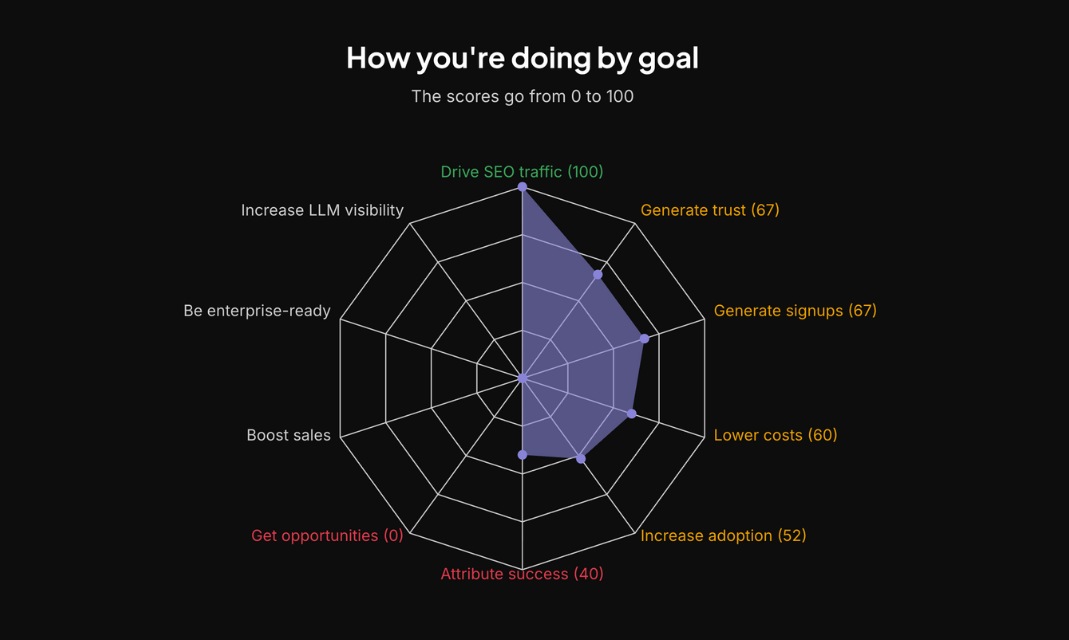
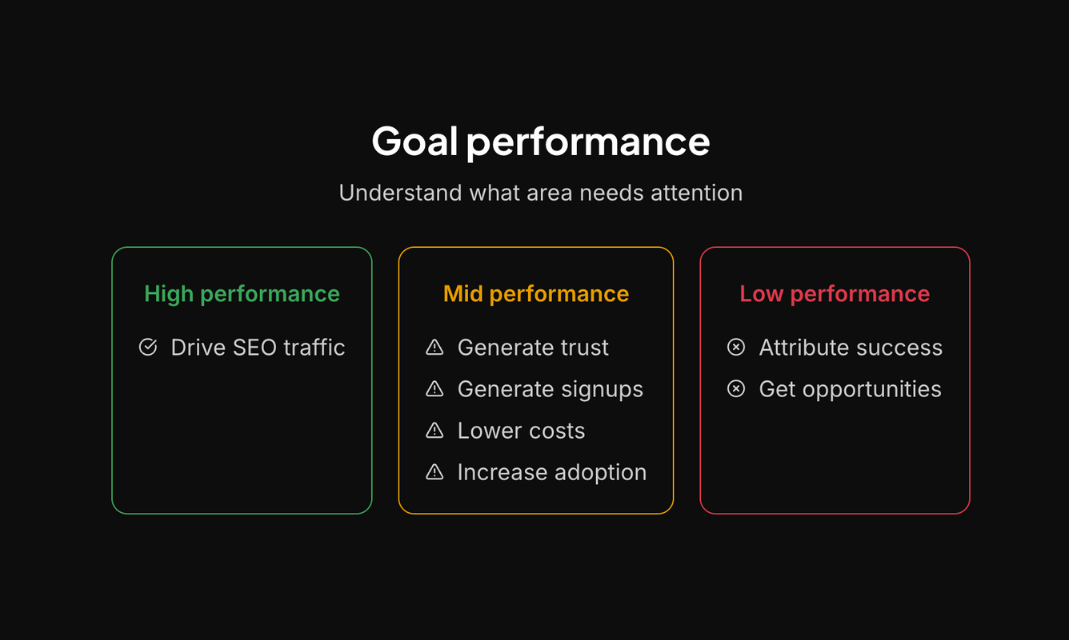
The Developer Docs Audit tool shows you exactly where developers drop off and why. The specific pages killing signups. The steps where users give up. The content gaps blocking revenue.
Docs work at every funnel stage (or kill you at every stage)
Discovery: Developers search for solutions to their problems. Your docs either show up in search and LLM answers, or you don't exist. You need to do SEO from your docs or you're missing some of the most high-intent traffic you can get.
Evaluation: They read your docs before they even sign up, and trust them more than ads or landing pages. So you need to explain your product clearly, show how it integrates with their current workflow, and so on.
Activation: After signup, they need to get to value fast and make your product part of their codebase. Your docs either guide them there, or they leave and never get back.
Revenue: 90% of developers say documentation quality influences their decision to pay. It's not a support cost, it's what drives revenue.
You either have a strategy or you'll pay the cost with low MRR and slow growth.
AI doesn't fix bad docs. It makes you invisible.
76% of developers use AI tools to discover tools and help them build.
First, the discoverability problem:
Developers ask ChatGPT and Claude for tool recommendations. If your docs are incomplete, poorly structured, or outdated, LLMs will ignore you and recommend your competitors instead.
You're not just losing SEO rankings. You're losing AI recommendations entirely.
Then, the integration problem:
When developers try to build with your product using Cursor or Copilot, these tools learn from your documentation. Broken examples? Missing guides? The AI hallucinates bad solutions or tells them your product can't do the specifics they need.
Developers don't debug AI answers. They move on. Immediately.
In the age of AI, bad and incomplete documentation makes you lose in two critical moments: discovery and implementation.
When your docs are good, AI amplifies your reach. When they're bad, AI works against you.
Contributors